
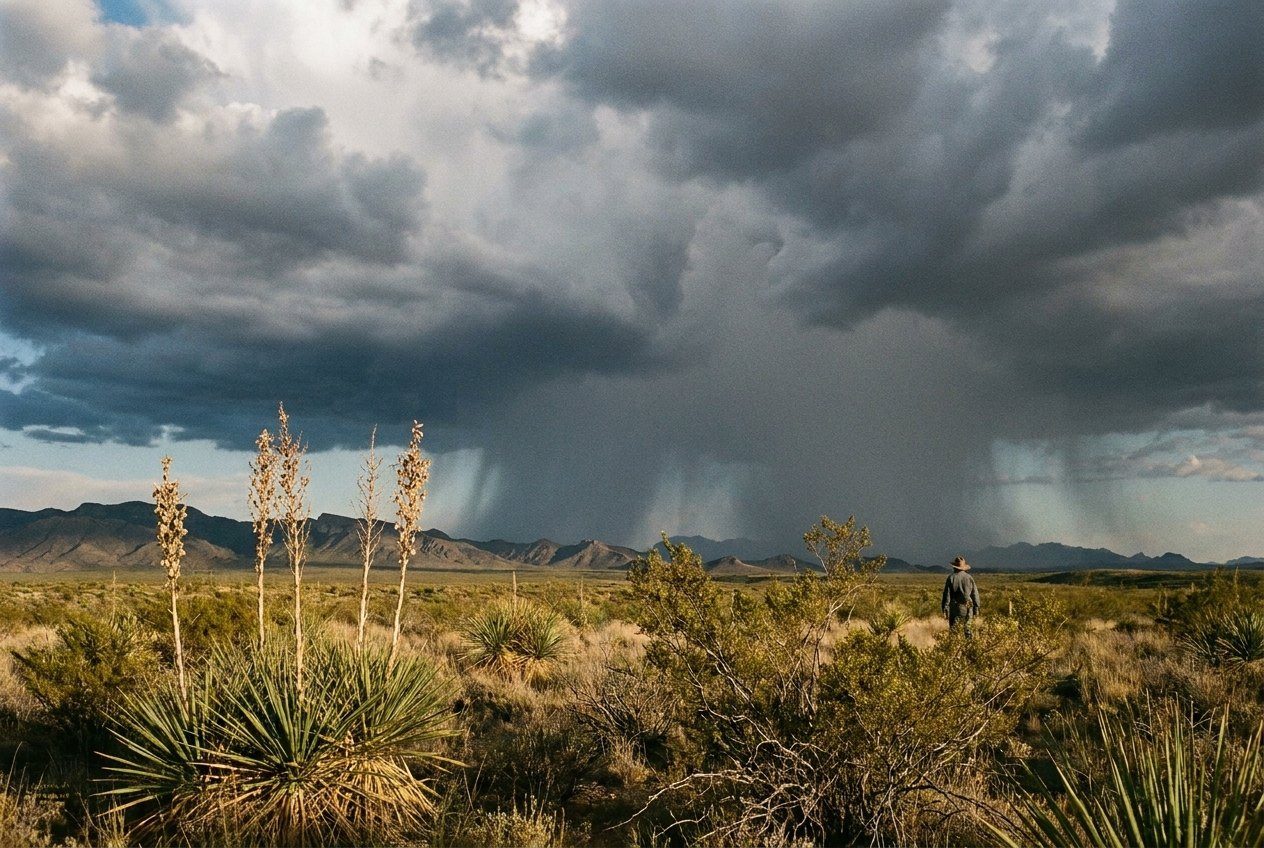
Desert senseWeather changes fast with elevation. Check forecasts for wind, storms and cold, avoid flooded crossings, and carry more water and warm clothing than the sunny morning suggests.
Visitors often imagine the desert as one long season of sun. Spend a year around Van Horn and you see something else. The region swings from searing June afternoons to snow on the high peaks, from weeks of dry wind to sudden summer downpours that fill washes in minutes. The changes are not as dramatic as in a mountain town or a northern city, but they matter for what you see, what you can do and how you prepare.
Elevation shapes everything. Van Horn sits around 4,000 feet, which keeps it cooler than the lower deserts. The Guadalupe Mountains rise to the highest point in Texas, the Davis Mountains to the south stand above 8,000 feet in places, and the basins between them sit lower and hotter. The same day can feel very different from one to the next.
Summer: heat and the monsoon
Summer arrives in May and June with long, hot, mostly dry days. Afternoon temperatures in the basins often reach well into the 90s and beyond, and sun on open ground is intense. Mornings and evenings stay cooler, especially at higher elevations, and the dry air means nights can feel pleasant even after a scorching day.
Then, roughly from July through September, the monsoon arrives. Moist air flows in from the south, and by early afternoon clouds build over the mountains into towering storms. They bring lightning, gusty wind, brief heavy rain and sometimes hail, often followed by clear, cool evenings and the smell of wet creosote.
The storms bring danger as well as relief. Rain falling on hard, dry ground runs off quickly, and washes and low-water crossings can flood within minutes, sometimes from a storm you cannot even see. Never drive into water over a road. On high ground, such as the climb to Guadalupe Peak, start early and be off exposed ridges before afternoon storms build.
Summer heat also changes the shape of a day. Walk in the first hours after sunrise, spend the middle of the afternoon in shade or on the road with the air conditioning running, and save short outings for the long golden evenings. Carry far more water than you would elsewhere, for yourself and for the car, and remember that a breakdown on an empty stretch of highway at three in the afternoon is a different matter in July than in January.
Autumn: maples and clear air
As the monsoon fades in September, the land is often at its greenest, with grasses tall and wildflowers in the basins. October and November bring warm, clear days, cool nights and the steadiest weather of the year, which is why many people consider autumn the best time to visit.
Autumn also brings colour to an unlikely place. From late October into November, the bigtooth maples of McKittrick Canyon turn red, orange and gold, and the canyon has its busiest weeks of the year. Elsewhere, cottonwoods along creeks and ranch tanks go yellow.
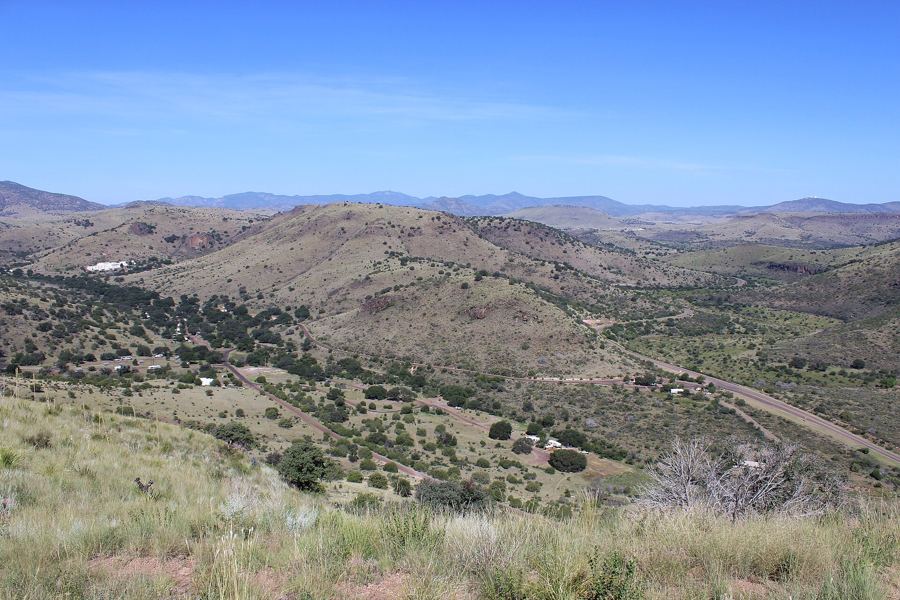 South · worth the detourThe high loop through the Davis Mountains
Winter: sun and cold nights
Winter is mild by day and cold by night. Many afternoons are sunny and comfortable for walking, while nights often fall below freezing, especially in the mountains and open basins where cold air settles. The clear, dry air that makes the stargazing excellent at McDonald Observatory also lets the heat escape quickly after sunset.
Now and then a winter storm brings snow to the high peaks of the Guadalupes and the Davis Mountains, and occasionally to the towns. It rarely lasts long at lower elevations, but it can close mountain roads and trails for a while and make the high country icy. Strong cold fronts can also bring hard wind, so a quiet sunny morning is not a promise for the afternoon.
Winter has real advantages. Trails are quiet, the light is low and clear, and long hikes are much more comfortable than in summer. Just remember the short days, and carry warm layers even when you set out in sunshine.
Spring: wind and dust
Spring is warming and often lovely, but it is also the windy season. From late winter into May, strong westerly winds sweep across the region, sometimes for days on end. The Guadalupes are especially known for wind, and gusts at the mountains and on exposed passes can be fierce enough to make walking hard.
Wind lifts dust from dry ground, and on the worst days visibility on highways can fall sharply. Large storm systems can send dust across hundreds of miles.
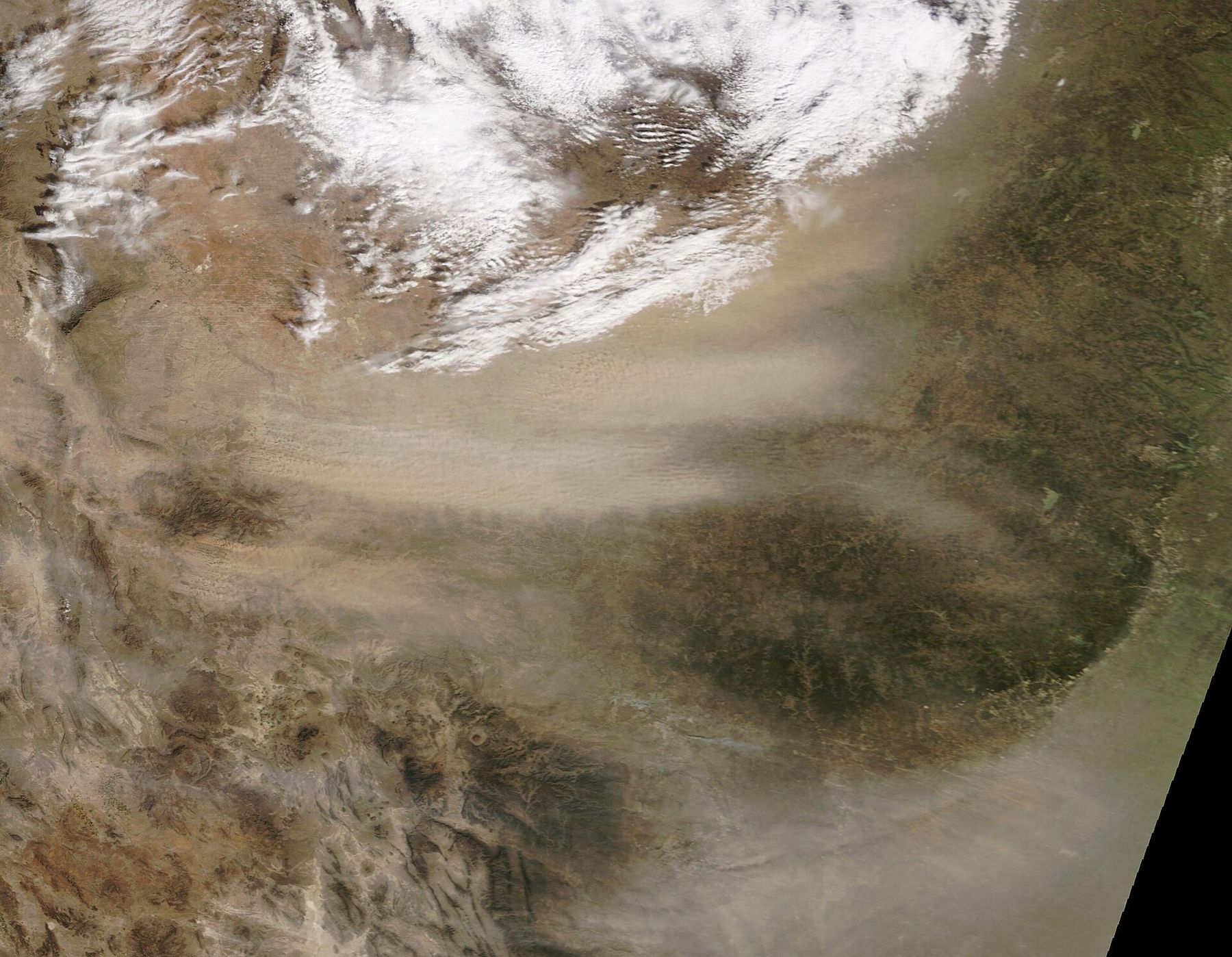
If you meet a dust storm while driving, slow down, turn on your lights, and if visibility drops badly, pull well off the road and wait. Between windy days, spring brings warm afternoons, blooming cactus and yucca, and pleasant temperatures for most activities. It is a good season for hiking, and for a swim at Balmorhea before the summer crowds.
Picking the month
- For hiking and general travel: October and November, then March and April, with an eye on spring wind.
- For autumn colour: late October into November in McKittrick Canyon.
- For storms and green desert: July through September, with care around flooding and lightning.
- For quiet and clear skies: winter, with warm layers for cold nights.
Each season shows a different side of far West Texas, and each rewards the visitor who comes prepared.
Back to the on the road road · every distance from Van Horn · the crossroads