Desert senseNights on the mountain are cold even in summer. Drive down slowly after dark: deer cross often and the road is winding. Fill up beforehand; there is no fuel nearby.
On a clear night in the Davis Mountains the sky is crowded. The Milky Way stretches from one horizon to the other, bright enough to cast a faint glow, and stars fill in the spaces that city skies leave empty. That darkness, together with dry air, high elevation and a long run of clear nights, is why the University of Texas at Austin built McDonald Observatory here. Its white domes stand on the summits of Mount Locke and Mount Fowlkes, above TX 118 northwest of the town of Fort Davis.
From Van Horn the observatory is roughly an hour and a half by road. It sits on the Davis Mountains scenic loop, so it is easy to combine with a day of driving, but the best reason to come is the night.
An observatory on a mountain
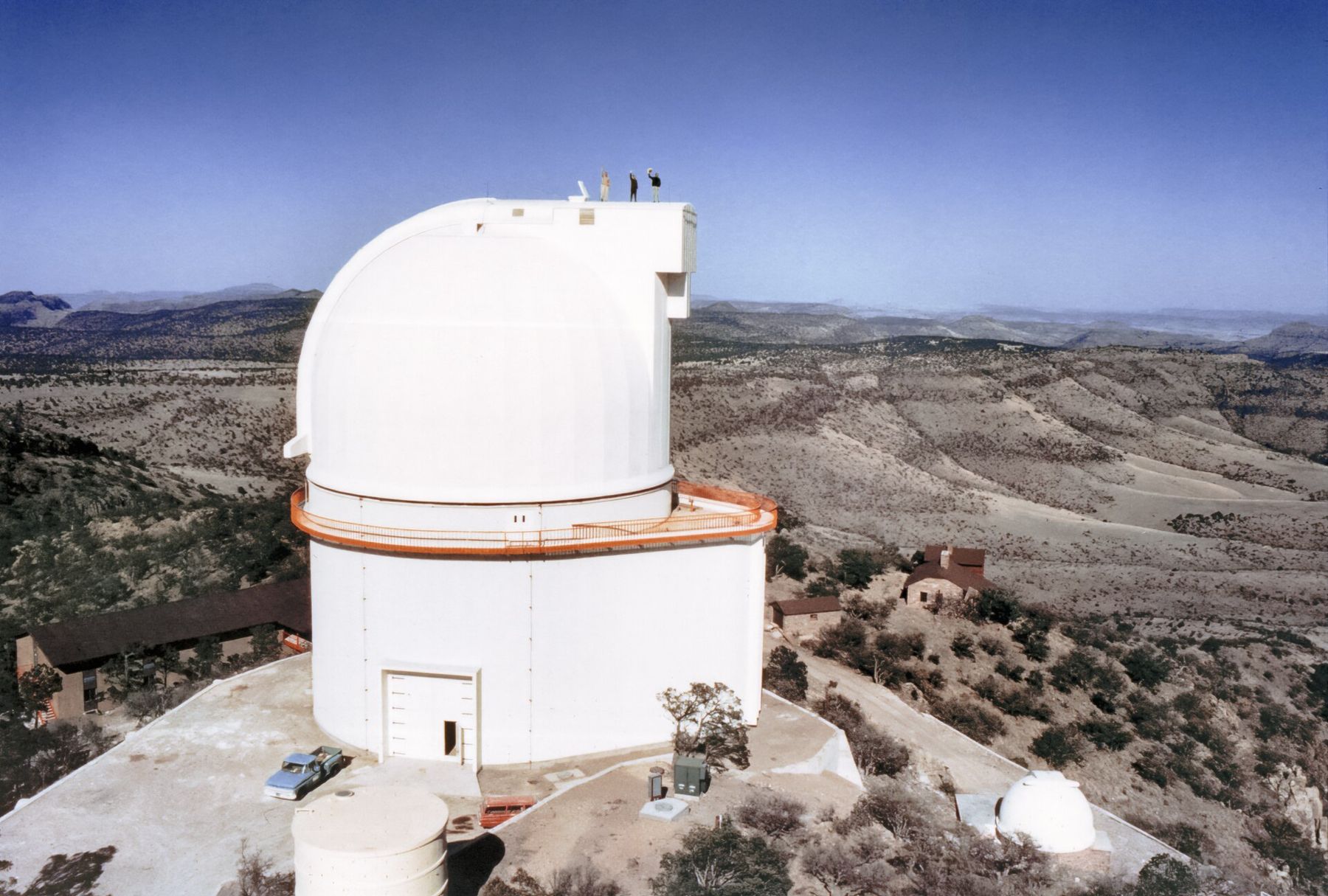
The observatory began with a bequest from William J. McDonald, a banker from Paris, Texas, who left much of his fortune to the University of Texas to build an observatory. The first great telescope on Mount Locke was dedicated in 1939. More instruments followed over the decades, and the observatory remains an active research site, used by astronomers who study stars, galaxies and the expansion of the universe.
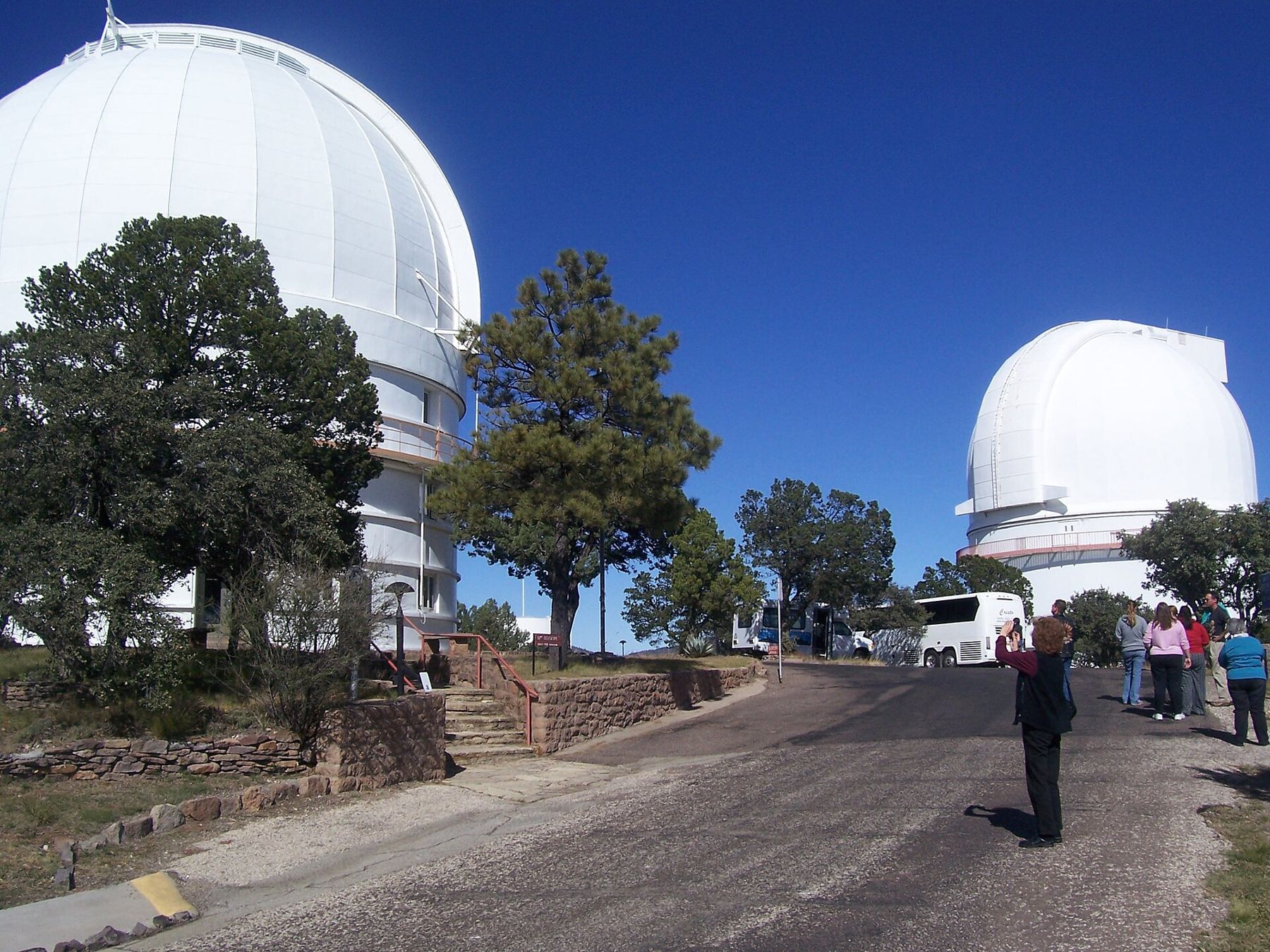
Several domes crown Mount Locke, the largest of them a tall white building that is easy to pick out from miles away. A narrow road spurs off the highway and climbs to the summit, and near the top a roadside sign marks it as the highest point on the Texas highway system. On a clear day the view from up here spreads across the whole range and far out over the desert beyond.
Walking between the domes, you notice how quiet the summit is by day. The real work happens after dark, when the shutters open and the telescopes swing toward the sky.
The Hobby-Eberly Telescope
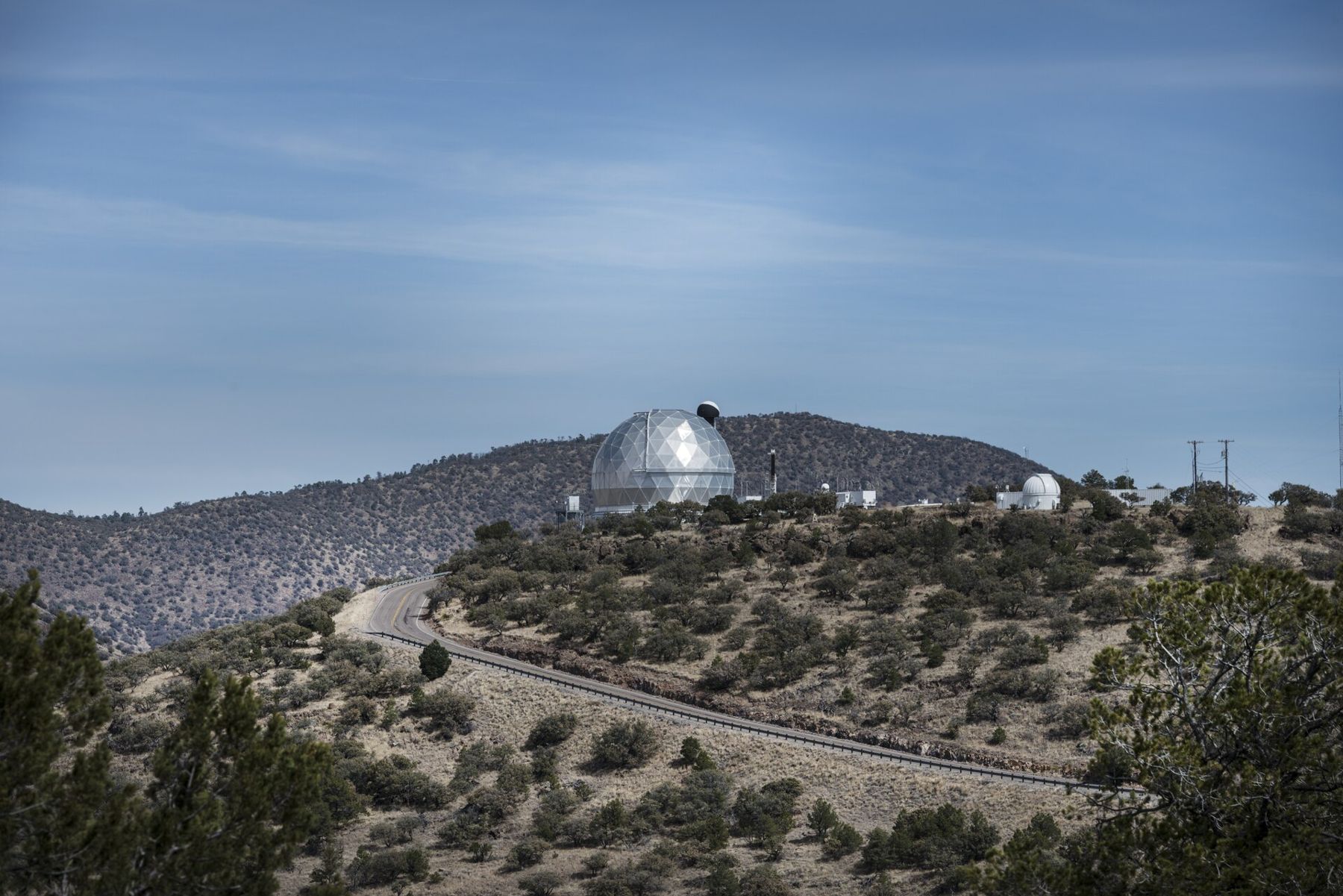
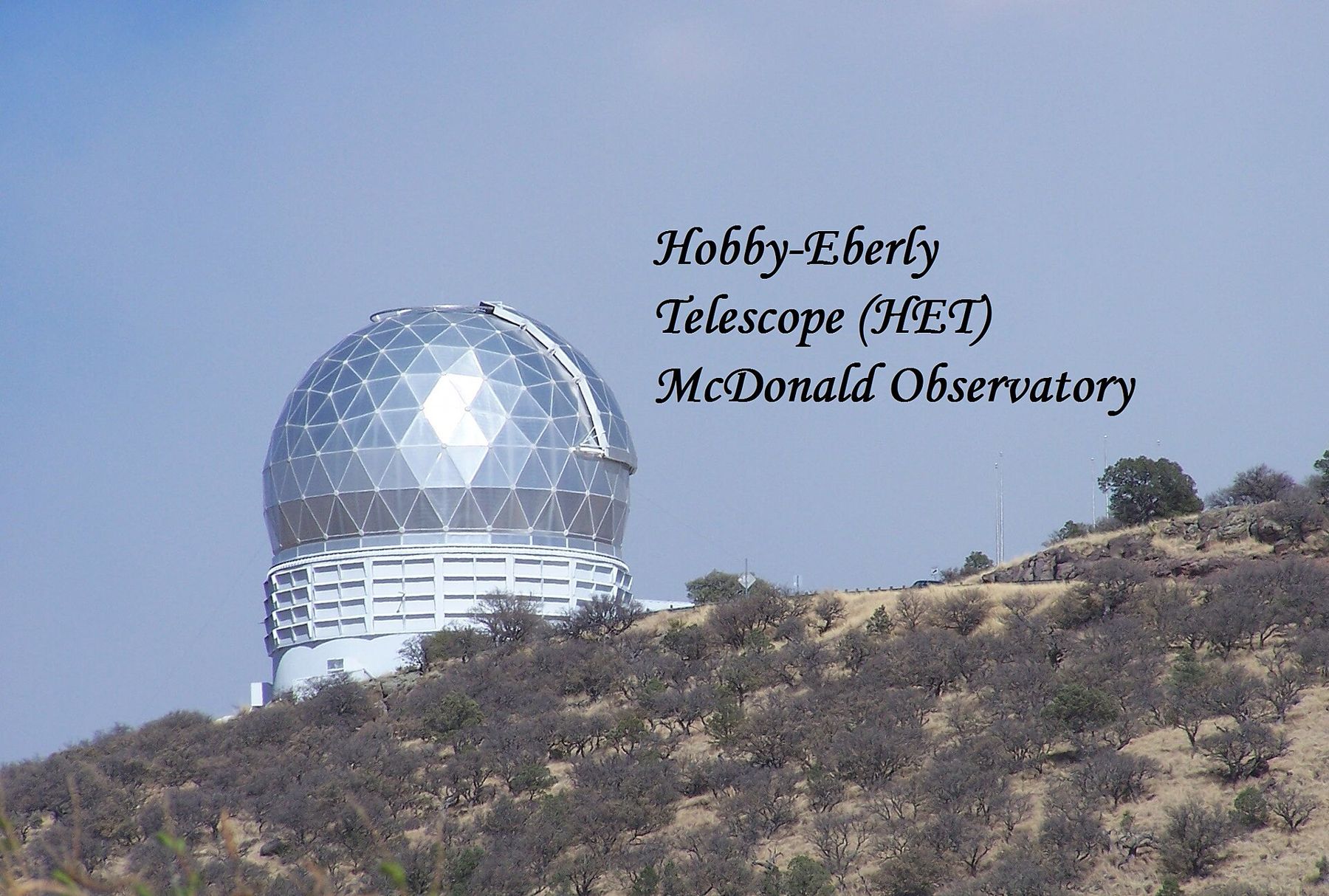
Across the valley on Mount Fowlkes stands a very different building: a silver geodesic dome that looks almost like a giant golf ball set among the oaks. Inside is the Hobby-Eberly Telescope, one of the largest optical telescopes in the world. Its main mirror is not a single piece of glass but a mosaic of many hexagonal segments working together, an arrangement that made such a large telescope possible at a lower cost.
The telescope has been used for large surveys of distant galaxies and for studying the planets of other stars. You see the dome clearly from the highway, and from some angles it catches the sun and flashes across the hillside. Whether you can visit it depends on the current tour program.
 On the road · worth the detourThe desert year, from monsoon to maple
Visiting by day
The visitor centre stands beside the highway below the summits. It has exhibits on astronomy and on the observatory itself, and it is the starting point for daytime tours. On a tour you may be taken up to see one or more of the large telescopes up close, and the guides explain how the instruments work and what the astronomers are studying. Tour times, formats and prices change through the year, and some programs need to be booked well ahead.
Give yourself time at the visitor centre even if you do not take a tour. The exhibits explain, in plain terms, how light from distant objects is collected and split into its colors, and how astronomers read that light to learn what stars are made of, how fast they move and how far away they lie. Outside, there are views across the mountains to the domes on both summits. The centre is also the place to confirm what is running that evening, since schedules can shift with weather and season.
Daytime programs sometimes include a look at the sun through filtered telescopes, a chance to see sunspots and the bright edge of our nearest star safely. Never look at the sun directly, and never through binoculars or a camera without a proper solar filter.
On a clear night in the Davis Mountains the sky is crowded.
Star parties and the night sky
The evening programs are what most visitors remember. At a star party, staff guide you around the night sky by eye, pointing out constellations, planets and bright stars, and then you line up at telescopes set up outdoors to look at whatever is best placed that night: perhaps the rings of Saturn, a cluster of stars, the craters along the edge of the moon or a distant galaxy. Some evenings offer special programs with time on larger telescopes, usually for an extra fee and in small groups.
These programs are popular and often sell out, especially on weekends, holidays and in the spring and autumn. Book tickets in advance where you can.
- Dress warm. At nearly 7,000 ft the air cools fast after sunset, even in summer. In winter, nights are properly cold.
- Use red light only. White flashlights and phone screens spoil everyone's night vision. Bring a red light or cover your phone.
- Watch the moon. A full moon washes out faint objects, so the darkest nights fall around the new moon.
- Weather decides. Clouds can roll in over the peaks, especially during the summer storm season.
Keeping the sky dark
The darkness here is not an accident of empty land alone. Towns in the surrounding area have worked to keep outdoor lights shielded and pointed down, so their glow does not spill into the sky above the observatory. When you stay in the region, you will notice how dim the streets are after dark. That is deliberate, and it protects both the research and the view.
Dark skies matter not only for research but for wildlife. Many animals in this desert are active at night, and artificial light confuses birds, insects and the hunters that feed on them. A dark night is part of the natural order of the place, as much as the grass and the rock.
You do not need a telescope to enjoy it. Pull off at a safe, legal spot along a quiet highway, switch off your lights, and give your eyes twenty minutes to adjust. The sky above Van Horn is dark too, and on the flats north of town toward the Guadalupes it can be just as clear.
Many visitors combine the observatory with the frontier post at Fort Davis and the scenic loop in a single day, ending with an evening program. Afterward, take the winding road down from the mountain slowly. Deer are everywhere at night, and it is a long, dark drive back to the desert.
Back to the south road · every distance from Van Horn · the crossroads