
Desert senseThe water is cool but the deck and parking area are not. Bring drinking water and sun cover, fill the tank before you leave I-10, and watch for farm traffic on TX 17.
The drive east from Van Horn on I-10 runs through some of the driest country in Texas. Creosote, gravel and long ridges go by for most of an hour, and nothing about the land suggests open water. Then you leave the interstate, drive a few miles on TX 17 past cotton fields and cottonwoods, and arrive at a pool large enough to swim laps in, filled from below by a spring.
That spring is San Solomon Springs, and the park built around it is Balmorhea State Park. People have come to this water for thousands of years. Apache bands watered horses here, farmers dug canals from it, and in the 1930s the Civilian Conservation Corps turned the spring outlet into one of the largest spring-fed swimming pools in the country. It is still the reason most people make the trip.
The pool the CCC built
The Civilian Conservation Corps put young men to work on public projects during the Depression, and in this part of Texas they left their mark in stone and adobe. At Balmorhea they enclosed the spring with walls of local limestone, shaped a pool that covers well over an acre, and added bathhouses and a long concrete deck. The work has the solid, plain look of most CCC buildings: thick walls, arched openings and stone laid by hand.
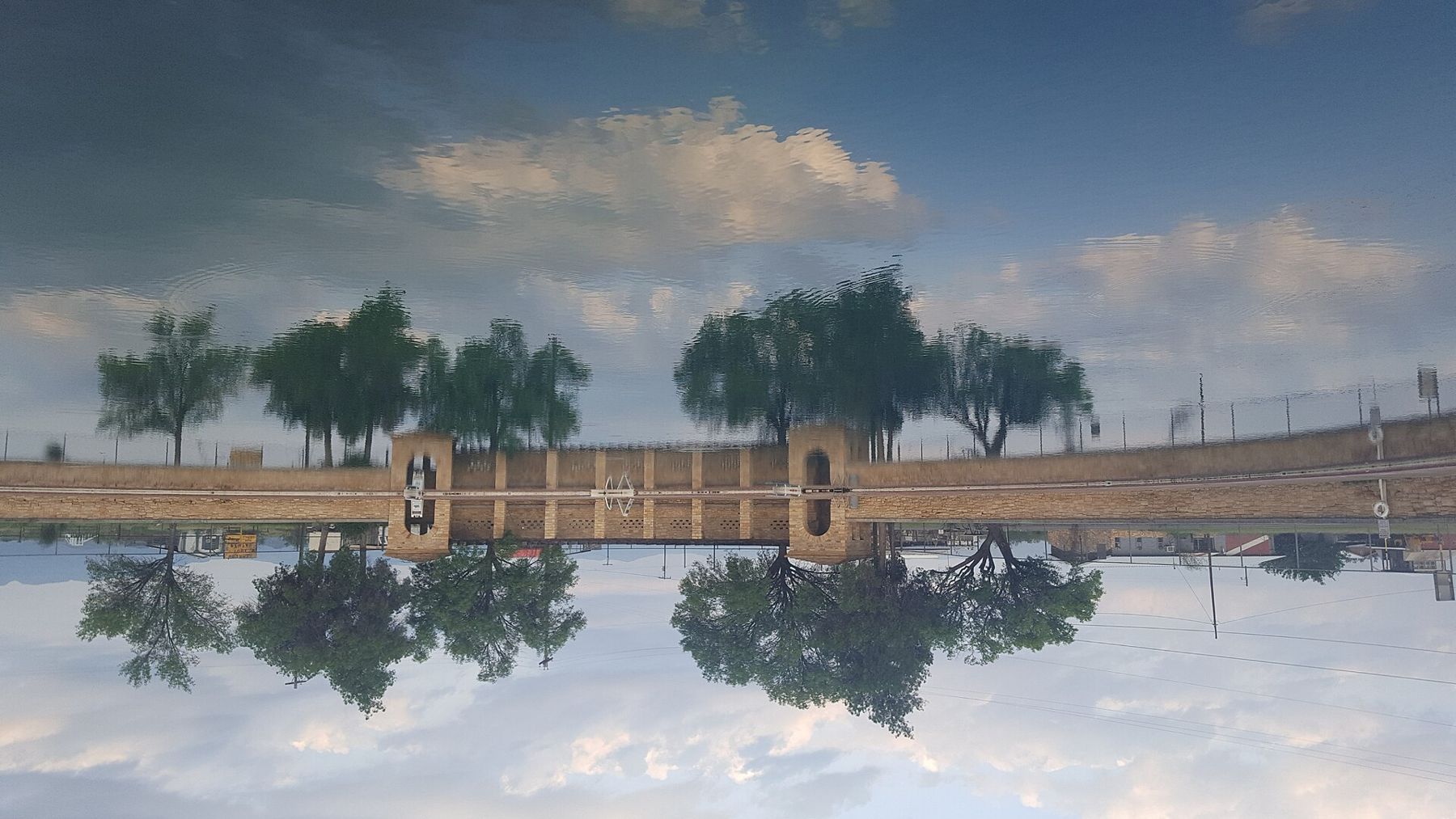
The pool is not a tiled basin. Its floor is mostly natural sand and rock, and the deepest part, over the spring itself, drops to roughly 25 feet. From the deck the water looks blue-green and very clear. On a still morning the stone walls and the trees beyond them lie upside down on the surface.
The water stays roughly in the low-to-mid 70s °F all year, because it comes up from underground at a steady temperature. In July that feels cool and wonderful. In March or November it feels bracing, though on a warm afternoon some people swim in every month. Divers use the deep end for training and practice, following the park's own rules for gear and depth.
Swimming with desert fish
Put on a mask and you will see that you are not alone. Small fish dart along the bottom and around the rocks, and turtles sometimes paddle through the shallows. The springs are home to native fish found in very few other places, including two endangered species: the Comanche Springs pupfish and the Pecos gambusia. Both evolved in the scattered spring systems of this part of the Chihuahuan Desert, and both lost most of their habitat as springs dried up or were channelled for farming.
The park asks swimmers to leave the wildlife alone, and that is easy to do. Do not chase or catch anything, do not feed the fish, and keep sunscreen use reasonable, since the pool is habitat as much as recreation. Watching a pupfish guard its patch of sand from a few inches away is one of the odd pleasures of swimming here.
 On the road · worth the detourLife in the Chihuahuan Desert
The ciénega beside the pool
Before the pool was built, the spring fed a marsh, a ciénega in the language of the Southwest, where water spread through reeds and sedges and the desert fish thrived. Building the pool and canals drained most of it. In more recent decades the park restored a ciénega wetland near the pool, with channels of spring water winding through tall grass, and it has become a refuge for the same fish that live in the pool.
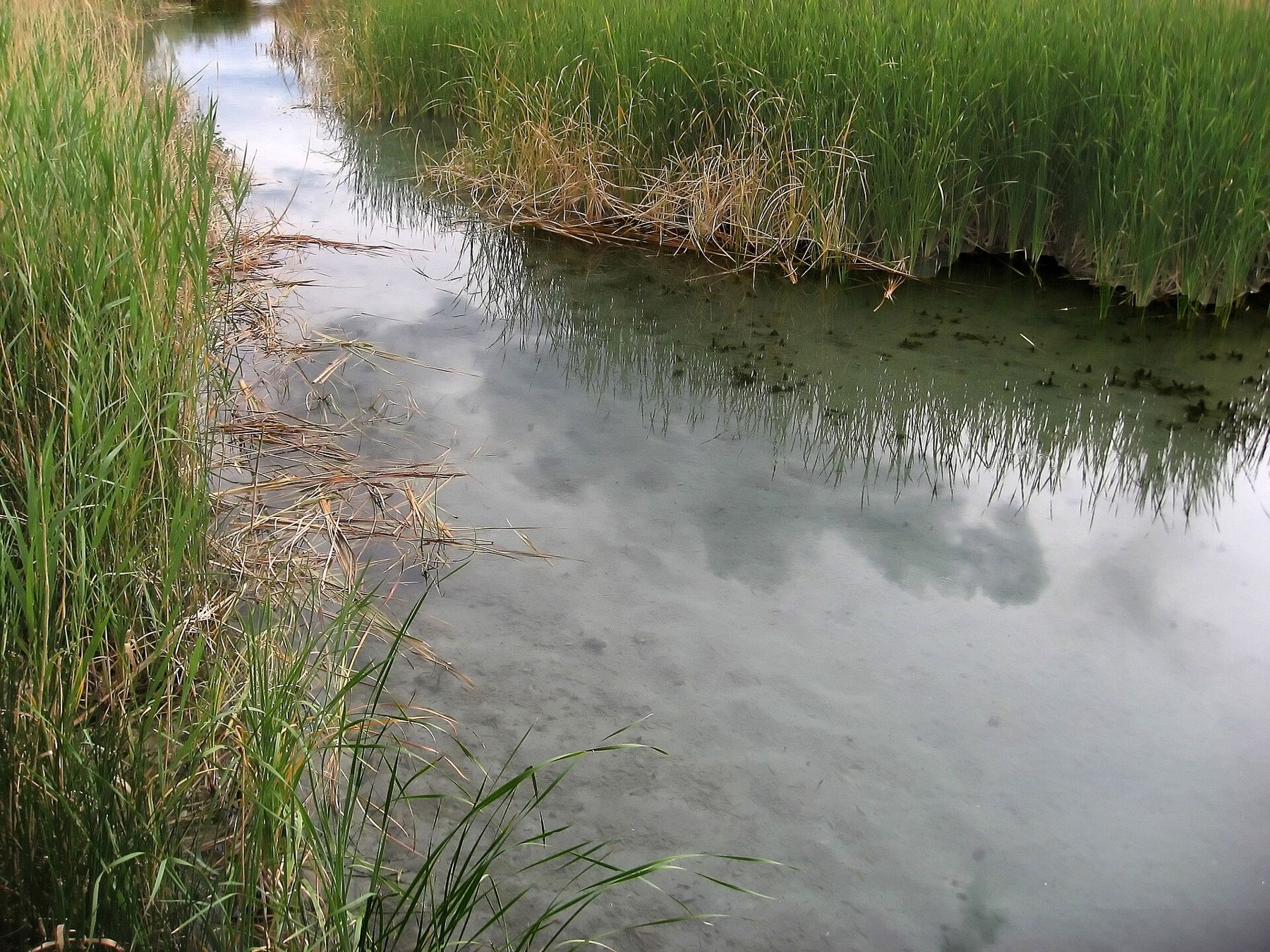
A short walk takes you along the edge. Look down through the water and you can see the sand bottom, the darting fish and the slow drift of plants. Dragonflies patrol the reeds, and birds that would never stop in the surrounding desert come here to drink and feed. It is a quiet place in the middle of the day, when the pool deck is noisy, and a good spot to understand what this spring meant to the land before anyone swam in it.
Before the gate
Balmorhea is popular, and the pool has limited room. The park has at times required day-use passes booked ahead, especially on weekends and through the summer, and it has closed for repairs to the old pool walls and other work in recent years.
- Arrive early. Mornings are calmer, cooler on the deck and less crowded.
- Bring your own gear. A mask and snorkel make the fish visible; water shoes help on rough edges.
- Know the rules. Expect limits on glass, food on the deck and where you can enter the water, and follow lifeguard and staff instructions.
- Plan for shade. The trees near the pool help, but much of the deck is open to the sun.
The park also has a campground. Campsites, like day passes, are limited, so look into them well ahead if you want to stay overnight.
Months that suit it
Summer is the busiest season, and for good reason: when Van Horn is baking, nothing beats a cool spring in the desert. It is also the most crowded time, and the heat away from the water is serious. Spring and autumn are often the best balance, with warm days, a manageable crowd and water that still feels refreshing after the drive. Winter weekdays can be almost empty, and a swim on a mild winter afternoon, with the water warmer than the air, has its own appeal.
Spring winds can be strong on the open plain, blowing dust across the deck. Summer brings afternoon thunderstorms, and staff clear the pool when lightning is near.
Around Balmorhea
The town of Balmorhea sits a few miles from the park, a small farming community fed by the same water through a network of canals. Fields of cotton and alfalfa line the roads, a surprising green after the drive in. South of the park, TX 17 climbs toward the Davis Mountains, and Balmorhea makes an easy first or last stop on a longer trip to Fort Davis or around the scenic loop.
From Van Horn it is an easy day trip: an hour out, a long swim, a walk by the ciénega and an hour back west with the light behind you. Remember that the drive back crosses no time-zone line, since Culberson and Reeves counties both keep Central Time. Fill up on fuel before or after, since services along this stretch of I-10 are spread far apart, and carry water for the car as well as for yourself. The spring has been doing its work for thousands of years. You only need a day to appreciate it.
Back to the south road · every distance from Van Horn · the crossroads