Desert senseUS 90 runs long and empty with few services, so leave with fuel and water. Nights are cold even after warm days, and deer and pronghorn cross the highway near dusk.
Leave Van Horn on US 90 and the road heads south-east across open country, with the Van Horn Mountains behind you and wide basins of grass and creosote ahead. The railroad keeps you company most of the way. After about an hour and a quarter the land rises onto a high plain, the grass gets thicker, and a cluster of trees and a dome appear on the horizon. That is Marfa, the seat of Presidio County.
Marfa is small, with a few thousand people, a grid of quiet streets and a pace that suits its altitude. It began as a railroad water stop in the early 1880s and grew into a ranching town. Since the late twentieth century it has also become known well beyond Texas for art, which has brought visitors from far away to a place that still feels like a West Texas county seat. You can see the main sights in a day from Van Horn, but staying until dark adds the town's most famous oddity.
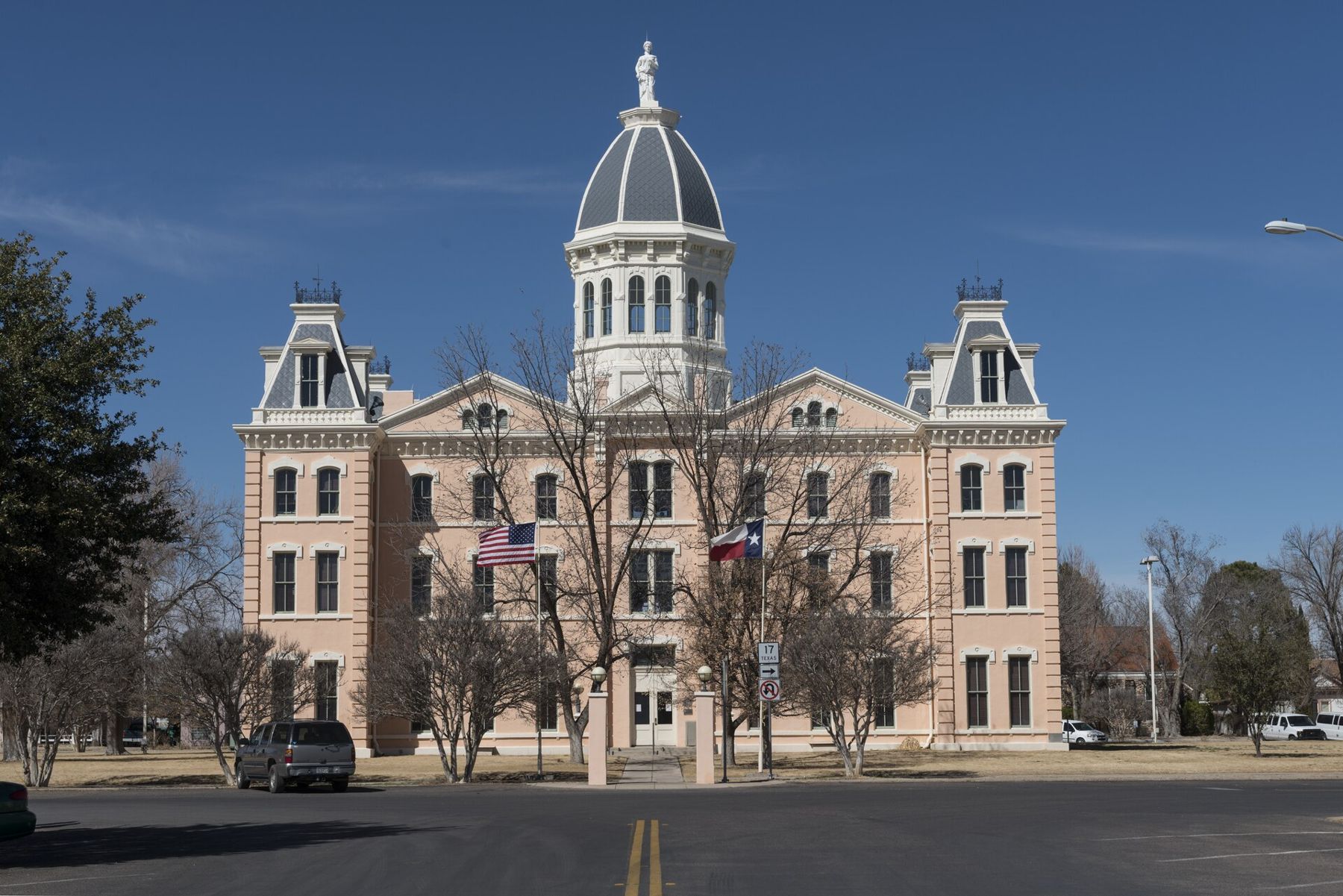
The Presidio County Courthouse
Highland Avenue, the main street, runs straight up to the courthouse, and it is worth walking the whole length to see it rise in front of you. Built in 1886, the courthouse is a tall building of brick and stone in the Second Empire style, with mansard roofs, corner towers and a central dome topped by a statue. It is painted a soft pink, which glows in the late afternoon against the deep blue sky of the high desert.
The courthouse has been carefully restored and still houses county government. When it is open on weekdays, visitors are often welcome inside to see the interior and climb toward the upper floors, from which the view runs out over the rooftops to the grassland and mountains. It is a working building.
The streets around the square hold a mix of old adobe houses, early brick commercial buildings and newer arrivals. Walking them is part of the visit. Notice how wide the streets are, laid out for ranch wagons, and how quickly the town ends and the grassland begins.
The Chinati Foundation
On the southern edge of town, the artist Donald Judd set up the Chinati Foundation, a museum of contemporary art in the buildings of the former Fort D. A. Russell. The army post was active in the early twentieth century and closed after the Second World War. Judd came to Marfa in the 1970s, acquired the old fort, and spent years adapting its buildings to hold large works of art in a permanent setting, rather than the shifting shows of a city museum.
The best-known works are Judd's own. Inside two former artillery sheds, he installed a hundred untitled works in mill aluminum, each box the same outer size but different inside, arranged in rows under long walls of windows. Outside, a line of large concrete works runs across the grassland. The pieces change with the light, which is much of the point: the sun moving across the sky changes them hour by hour.
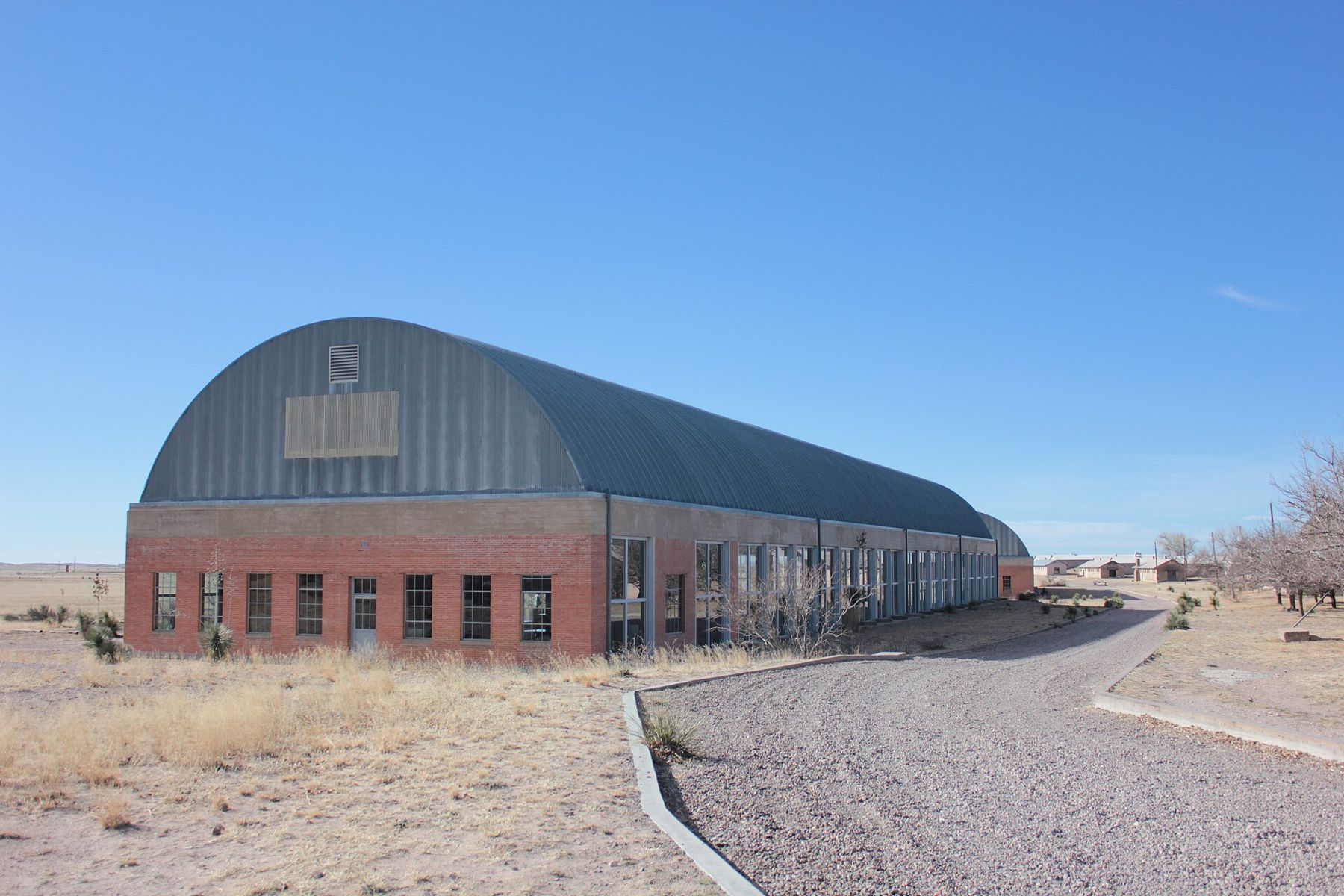
The museum shows work by other artists too, in other old buildings around the grounds. Many parts of the collection can be seen only on a guided visit, and opening days are limited, so plan ahead. Allow a good part of a day if you want to see much of it.
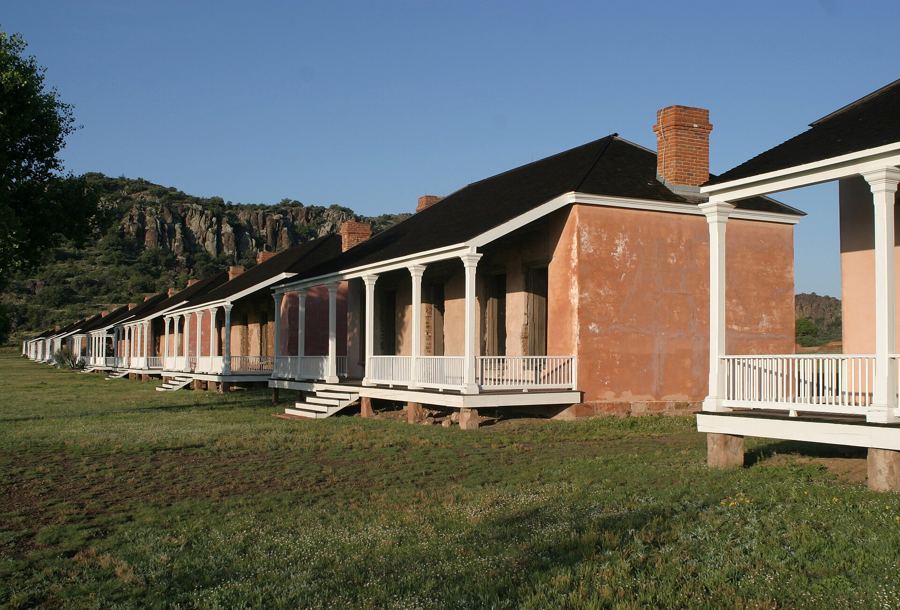 South · worth the detourFort Davis, the frontier post under the cliffs
The Marfa lights
For well over a century, people have reported seeing unexplained lights on the plain east of Marfa, toward the Chinati Mountains. Some describe glowing orbs that hover, split or drift. Others see what look like distant headlights or nothing at all. Explanations range from car lights on far-off highways to tricks of air layers over the cold grassland to things nobody has settled. We leave the verdict to you.
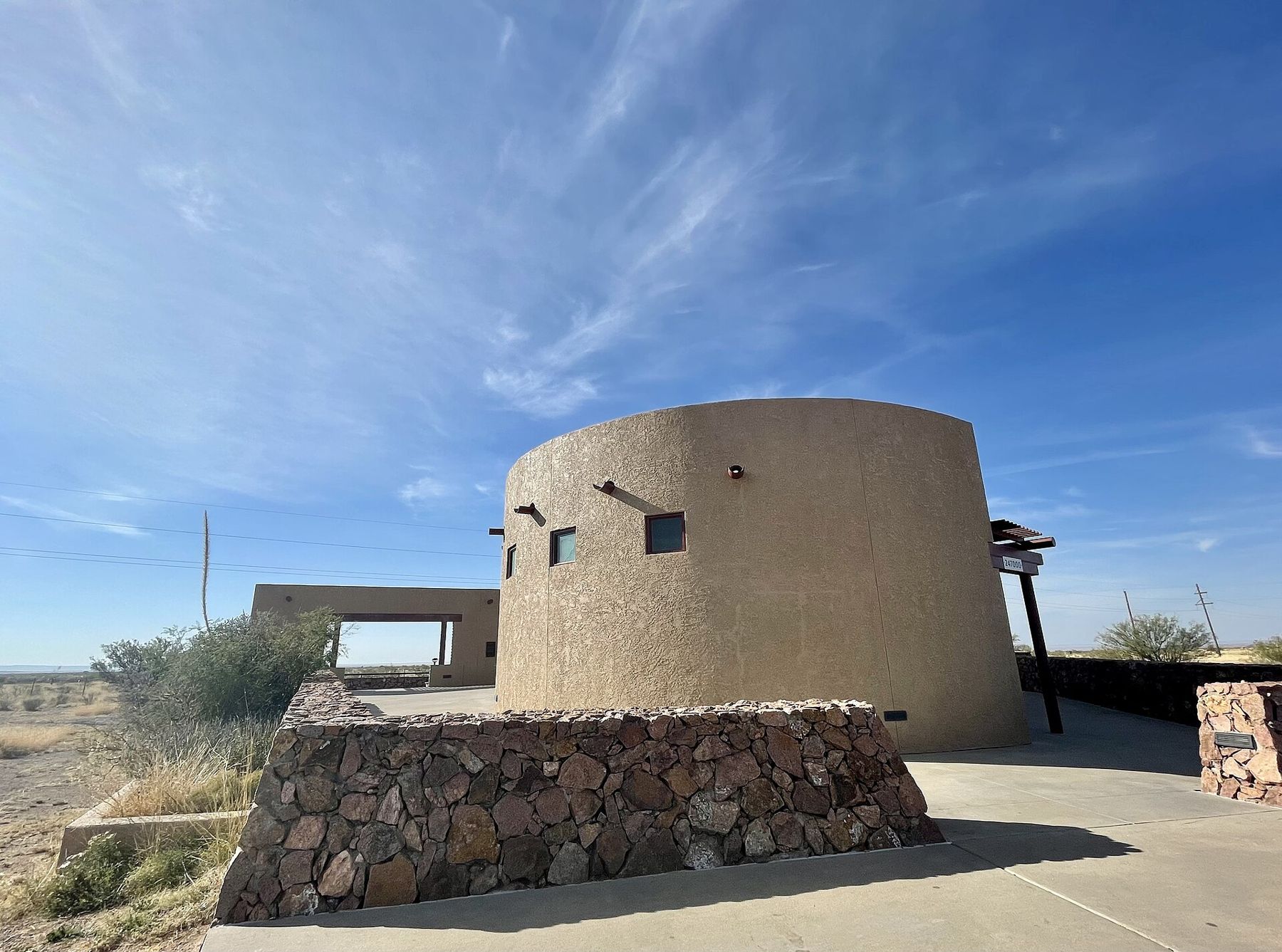
The Marfa lights viewing area sits on the south side of US 90, roughly nine miles east of town toward Alpine. It is a roadside stop with a low building, an open platform facing the plain and a few interpretive panels. After dark, people gather on the platform and look south.
After dark, people gather on the platform and look south.
If you go, give it time. Arrive before sunset, watch the light fade over the grassland, and then wait. Bring a jacket, because nights at this altitude get cold quickly even in summer. Keep headlights off once you park, speak quietly and share the binoculars. Whether you see anything strange or not, the size of the night sky out here is reason enough to stand and look.
Beyond Marfa
Marfa sits in a cluster of places worth combining. Fort Davis lies about twenty miles north on TX 17, and the drive climbs into wooded mountains. Further on, McDonald Observatory runs night programs, and the same dark sky that frames the Marfa lights is the reason the telescopes are there. From Fort Davis you can drive the Davis Mountains loop and return to Van Horn by way of I-10.
On the drive, you may pass a Border Patrol checkpoint on highways in the region. Stop when directed and answer the officers' questions.
Months that suit it
Marfa is high enough that summers are warm rather than brutal, with afternoon storms building over the mountains. Autumn and spring are the most comfortable seasons, with clear days and cool evenings. Winter brings cold nights, occasional frost and the clearest skies, which suit the lights viewing area. Some museum days and public buildings are closed on certain weekdays.
Whenever you come, take the town slowly. Walk Highland Avenue, sit for a while near the courthouse, and let the afternoon stretch out. Marfa rewards the visitor who is in no hurry, which suits a drive that begins in Van Horn.
Back to the south road · every distance from Van Horn · the crossroads